

Most people recognize commercial signs without really thinking about them. They know a monument sign when they see one. They expect channel letters on a storefront. They follow directional signs without questioning who planned them or why they look the way they do.
For businesses, though, signs are never just background details. Every sign sends a message long before a customer walks through the door. It communicates permanence or flexibility. Confidence or caution. Clarity or confusion. And while many businesses focus on what their sign says, fewer think about what the type of sign itself is saying.
That distinction matters more than most people realize.
This series is built around a simple idea: signage is not decoration. It is communication. The materials, scale, placement, and format of a sign all influence how a business is perceived, often subconsciously. Whether a sign feels temporary or established, inviting or overwhelming, thoughtful or rushed is rarely accidental.
This introductory blog sets the foundation for understanding how different commercial sign types function and what they communicate. Each post in the series will take a closer look at a familiar sign type and unpack the role it plays in visibility, branding, navigation, and trust.
BUSINESS SIGN TYPES PORTFOLIO







Why Sign Type Matters More Than People Think
When businesses talk about signage, the conversation often starts and ends with design. Logos, colors, fonts, and messaging take center stage. While those elements are important, they only tell part of the story.
Sign type determines how a sign is experienced before any design details are processed. A sign placed at eye level sends a different message than one elevated above traffic. A sign built into the landscape communicates something very different from one mounted temporarily to a building. These decisions shape perception before a single word is read.
Different sign types serve different purposes. Some are designed to attract attention from a distance. Others exist to guide visitors once they are already on site. Some reinforce brand identity, while others focus on compliance or functionality. Problems arise when sign types are chosen without considering the role they are meant to play.
An effective signage system feels cohesive and intentional. Each sign supports the next, creating a smooth experience from the street to the interior of a space. When sign types are mismatched or selected without a plan, even well designed signage can feel disjointed.
Understanding Commercial Sign Types
Reading this series is not about learning definitions you can find anywhere. The real value comes from understanding how different sign types function in the real world and how they influence perception.
For business owners, this knowledge supports better long term decisions. Instead of choosing signage based solely on cost or aesthetics, you can evaluate options based on visibility, longevity, and overall impact.
For property managers and developers, understanding sign types helps create consistency across multiple tenants or locations. It allows signage to support wayfinding and brand clarity without visual clutter.
For growing organizations, this perspective makes it easier to plan signage systems that can evolve over time without losing cohesion. When sign types are chosen with intention, additions and updates feel natural rather than piecemeal.
Ultimately, this series is designed to help readers think more strategically about signage. Not as a single project, but as a system that works quietly in the background to support business goals.
Who Can Benefit From this Blog Series
This series is written for people who already understand that signage matters, but want to make smarter, more intentional decisions.
It is especially useful for:
-
Business owners planning a new location or rebranding an existing one.
-
Property managers responsible for multi tenant or multi building sites.
-
Developers and general contractors coordinating signage across projects.
-
Organizations that want consistency across multiple locations.
If you are making decisions about signage beyond a single storefront, understanding sign types is essential.

What Happens When Sign Types Are Chosen Without a Plan

When sign types are selected one at a time, without a broader strategy, even well designed signs can create problems.
Common issues include:
-
Poor visibility despite high quality sign design due to obstructions, trees, or other factors.
- Confusing wayfinding for visitors and tenants new to the property.
-
Inconsistent branding across a property or multiple sites.
-
Costly changes or replacements later due to insufficient planning.
These problems rarely come from bad design. They come from decisions made without understanding how different sign types work together.
Visual Guide: What Different Sign Types Do at a Glance
This series is designed to be visual as well as informative. Each sign type serves a distinct role, which makes it easy to compare them side by side.
Here is quick reference for what these different sign types do. Check back in over the coming weeks to learn more about these sign types as well.
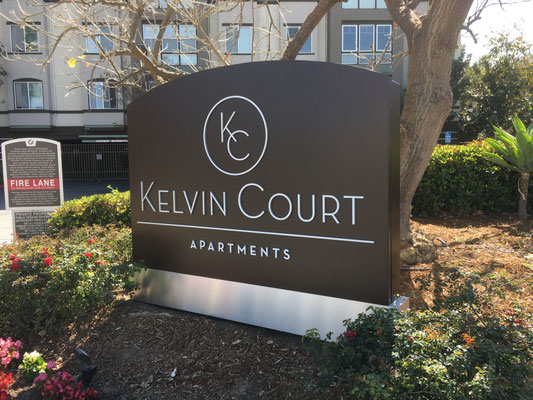
Monument Signs
Establish permanence and trust at the street level.
Channel Letter Signs
Reinforce brand visibility on building facades.
3D Signs
Add depth and visual impact to facades and interiors
Pole Signs
Maximize your long distance visibility.
Directional Signs
Guide movement and reduce confusion.
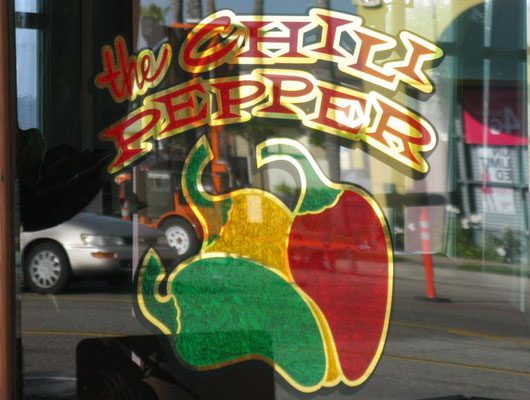
Window Signs
Communicate messaging at close range.
ADA Signs
Support accessibility and compliance.
Lobby Signs
Shape first impressions once indoors.
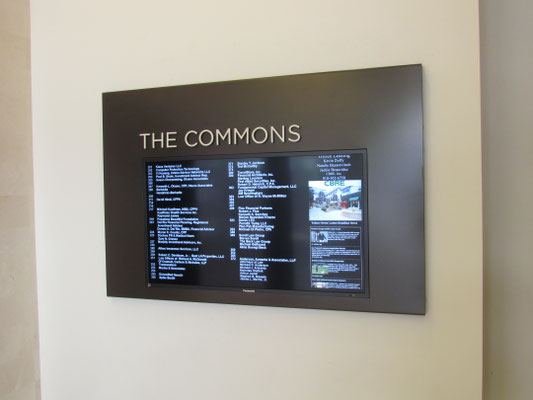
Directory Signs
Provide clear direction for multi-tenant properties.
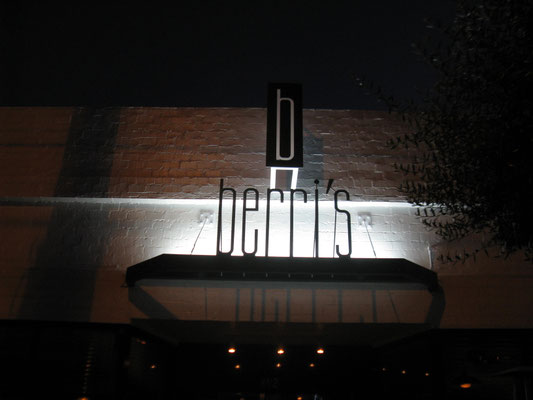
Illuminated Signs
Extend visibility after dark and during the winter season.
Wood Signs
Convey warmth and craftsmanship.
Blade and Projecting Signs
Improve pedestrian level recognition.
Each of these signs will be explored in detail in the coming blogs. They can also be viewed in more detail in the sign portfolio here.
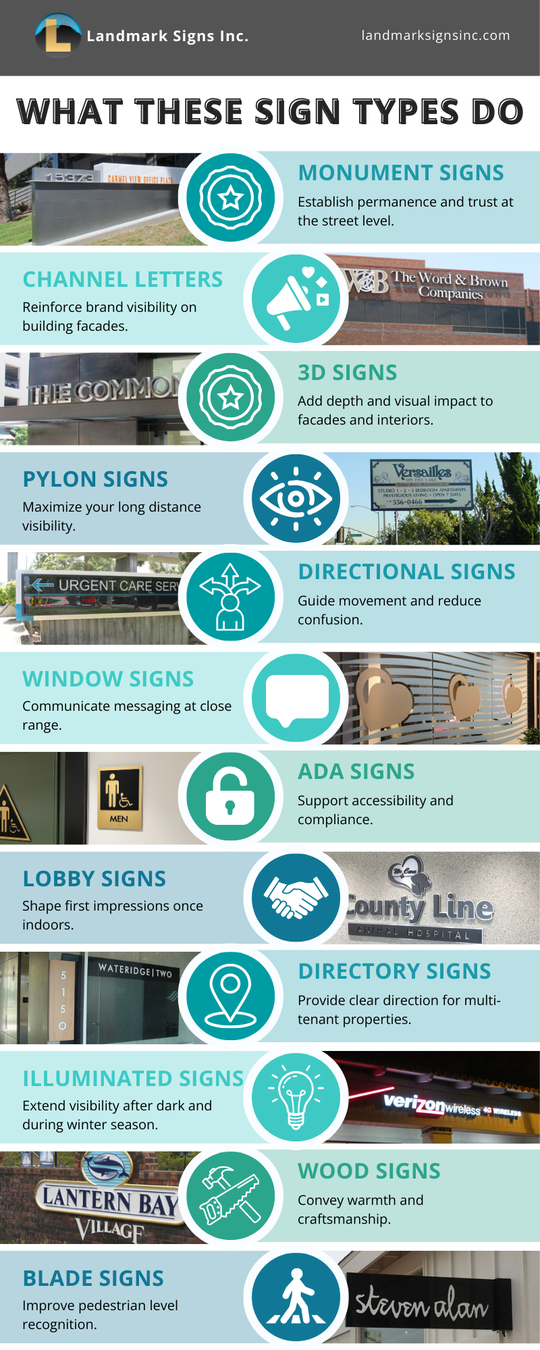
Commercial Sign Types Covered in This Series
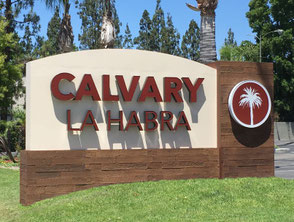
MONUMENT SIGNS
Establish permanence at the street level and create a strong first impression. They communicate stability and long term investment, signaling trust and professionalism. These signs are ideal for businesses that want to anchor their brand and presence.

CHANNEL LETTER SIGNS
Mounted directly to building facades, they enhance brand visibility and create a professional appearance. These signs are visible from a distance and at street level, reinforcing brand identity. They work well for retail and commercial storefronts seeking clear recognition.

3D SIGNS
Adds dimensionality to building facades and interior spaces, creating visual impact and sophistication. They communicate attention to detail and brand quality. 3D signs enhance visibility while adding an element of design interest.
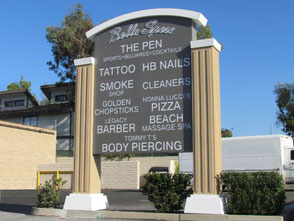
POLE SIGNS
Elevated for maximum long distance visibility, pole signs capture attention from busy streets or highways. They communicate a strong presence and accessibility to passing traffic. These signs are especially effective in areas where distance visibility is critical.

DIRECTIONAL SIGNS
Help visitors navigate properties, campuses, or developments efficiently. They convey organization, clarity, and professionalism. Properly designed directional signage reduces confusion and improves the overall visitor experience.

WINDOW SIGNS
Deliver messaging at close range, complementing other signage types. They can advertise promotions, reinforce branding, or provide essential information. Well designed window signage enhances visibility without overwhelming the space.

ADA SIGNS
Support accessibility and compliance, contributing to a professional and inclusive environment. They communicate respect and care for all visitors. ADA signage works best when integrated thoughtfully into the overall signage system.

LOBBY SIGNS
Shape first impressions inside, reinforcing brand identity and professionalism. They create a welcoming environment while maintaining cohesion with exterior signage. Lobby signs contribute to an intentional interior experience.
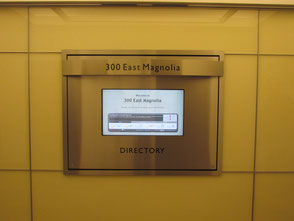
DIRECTORY SIGNS
Organize multi tenant environments and simplify wayfinding. They communicate order and help visitors locate destinations easily. Directory signage reinforces professionalism and improves user experience in shared spaces.
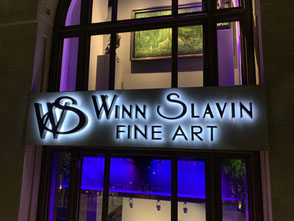
ILLUMINATED SIGNS
Extend visibility after dark, maintaining brand presence and attracting attention. They communicate reliability and readiness, signaling an active and professional business. Lighting design is critical to ensure clarity and positive perception.

WOOD SIGNS
Convey warmth, craftsmanship, and authenticity, reflecting a personal or artisanal brand identity. They communicate character and professionalism. Proper materials and placement ensure longevity and aesthetic appeal.

BLADE & PROJECTING SIGNS
Designed for pedestrians, they improve recognition at street level. They communicate approachability and make navigation easier in dense commercial areas. Placement and design ensure visibility without overwhelming the architecture.
The Complete Guide to Commercial Sign Types
Understanding all 12 commercial sign types is essential for creating a cohesive and professional signage system. Each type communicates unique aspects of your brand and presence, helping you guide visitors, build trust, and make a lasting impression before anyone even steps through your door. By knowing how each sign functions, you can strategically plan a signage system that works together to support your business goals.
This blog series will explore each sign type in depth over the coming weeks. Every post will provide practical tips, real world examples, and guidance on placement, scale, and materials to help you make informed decisions. Following the series will equip you with the insights to create a signage system that communicates your brand intentionally and effectively.
If you’re ready to elevate your signage strategy or have questions about which sign types are right for your property or business, our team at Landmark Signs is here to help.
Contact us today to discuss your project and get expert guidance on designing a professional, cohesive signage system that will last for years.
Write a comment