
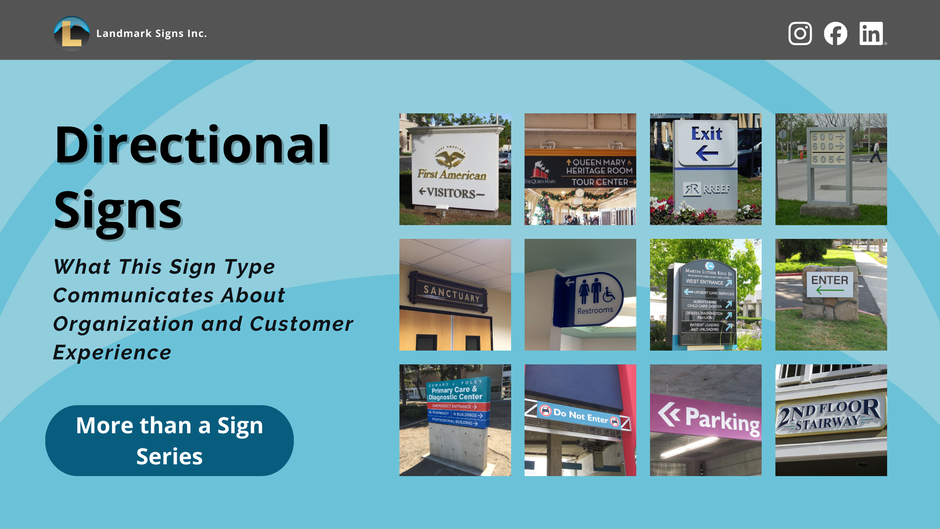
Will Directional Sign Help My Business?
Directional Signs help businesses by improving navigation, reducing confusion, and creating a more organized experience for visitors and staff. They are especially important in multi-tenant properties, public spaces, and complex layouts where clear wayfinding supports efficiency and professionalism.
Directional Signs are most effective in multi-tenant buildings, medical facilities, campuses, office complexes, parking structures, and other public or shared spaces with multiple destinations or complex layouts.
Functionally, Directional Signs reduce hesitation, improve traffic flow, and help people move through a space efficiently without stopping to ask for help or backtracking
.
When wayfinding is intuitive, staff spend less time giving directions, visitors arrive at their destinations with confidence, and movement through the property feels calm and controlled.
Beyond visitor experience, Directional Signs support internal efficiency and reinforce a professional image, signaling that the space is well managed and intentionally designed.
Directional Signs are not optional additions. They are a core part of how a business functions, operates, and is remembered.
What Directional Signs Communicate About Your Business
What do Directional Signs communicate about your business?
Directional Signs communicate structure and organization. They signal that a space has been planned intentionally and that visitors are expected, guided, and supported. At a glance, they communicate clarity, professionalism, efficiency, and a well-managed experience for visitors.
Clarity
Directional Signs remove uncertainty. They answer questions before they are asked and help people understand where to go without hesitation. This clarity reduces stress and allows visitors to
focus on why they are there rather than how to get there.
Organization
Clear directional systems suggest order and intentional planning. They show that the property is managed with care and that movement through the space has been considered rather than improvised.
Professionalism
When Directional Signs are consistent, legible, and well placed, they reflect operational competence. They suggest that the business values efficiency and understands the importance of clear
communication beyond marketing.
Efficiency
Directional Signs support smooth traffic flow, both on foot and in vehicles. They help prevent congestion, wrong turns, and backtracking, which improves the overall experience for visitors and
staff alike.
Confidence
Clear direction creates confidence. Visitors feel more comfortable navigating a space when they know what to expect and where to go next. That confidence often transfers to how they perceive the
business itself.
Accessibility
Directional Signs communicate inclusivity. When signage considers visibility, placement, and legibility for all users, it shows awareness and respect for different needs and abilities.
Consistency
A cohesive directional system reinforces brand and property standards. When signs look and read consistently, they signal reliability and attention to detail across the entire environment.
Intentional Experience
At a deeper level, Directional Signs reflect how much thought has gone into the visitor journey. They communicate that the experience has been designed, not left to chance.
These impressions are formed quickly, often without conscious thought, yet they play a major role in how a space is remembered.
Do I Need a Directional Sign?
Yes, if visitors must make decisions after arrival, Directional Signs are essential.
They help people understand where to go, what to expect, and how to move through a space without confusion or hesitation.
Directional Signs are especially valuable for businesses and organizations that serve the public, manage multiple tenants, or operate within large or complex environments. Clear direction reduces stress, prevents bottlenecks, and improves how visitors perceive the space as a whole.
They also support internal efficiency. When wayfinding is intuitive, staff spend less time giving directions, and visitors arrive where they need to be with confidence rather than frustration.
If your goal is to create a smooth, professional experience from arrival to destination, Directional Signs are not optional. They are a core part of how a space functions and how it is remembered.
What Are the Benefits of the Directional Sign?
Directional Signs provide clear guidance that improves navigation, safety, and overall user experience across a business environment.
These benefits are most effective when Directional Signs are thoughtfully designed, consistently branded, and strategically placed throughout a property.
Directional Signs are especially valuable in office complexes, medical facilities, multi-tenant properties, campuses, retail centers, and large commercial sites.
Well-designed Directional Signs help businesses:
-
Reduce confusion and hesitation
-
Improve traffic flow and safety
-
Enhance visitor confidence and comfort
-
Support accessibility and inclusivity
-
Reinforce professionalism and organization
By minimizing wayfinding questions and movement issues, Directional Signs reduce staff interruptions, improve efficiency, and support smoother day-to-day operations.
Together, these benefits explain why Directional Signs are not optional add-ons but essential infrastructure for businesses that value clarity, accessibility, and a professional experience.
Where Directional Signs Work Best for Local Businesses
Directional Signs are essential anywhere people need to make decisions about where to go next. They are especially valuable in environments that are large, multi use, or unfamiliar to visitors.
Common settings where Directional Signage is especially effective include:
- Medical campuses and healthcare facilities
- Corporate offices and headquarters
- Retail centers and shopping plazas
- Multi tenant office parks
- Educational campuses
- Hotels and hospitality properties
- Civic and municipal buildings
In these spaces, Directional Signs reduce confusion and support smooth movement. They help visitors feel oriented and in control, even when navigating complex environments.
Directional Signs are rarely meant to stand alone. They work best as part of a coordinated signage system that includes monument, pole, building, directory, and interior signage.
Together, these elements guide visitors from arrival to destination without friction.
Directional Sign Design Considerations
The effectiveness of Directional Signs depends on thoughtful design decisions that prioritize function without sacrificing professionalism.
Placement is critical. Signs must appear exactly where decisions are made, not after confusion has already occurred. Poor placement can render even the clearest message ineffective.
Legibility matters just as much. Fonts, contrast, and spacing must allow information to be processed quickly, whether someone is driving, walking, or pausing briefly.
Consistency across the system is also essential. Directional Signs should share a visual language so visitors instinctively recognize them as guidance rather than decoration.
- Key design considerations include:
- Clear hierarchy of information
- Readable fonts and strong contrast
- Placement aligned with decision points
- Consistent design across the property
Each of these choices influences how easily people move through a space and how they feel while doing so.
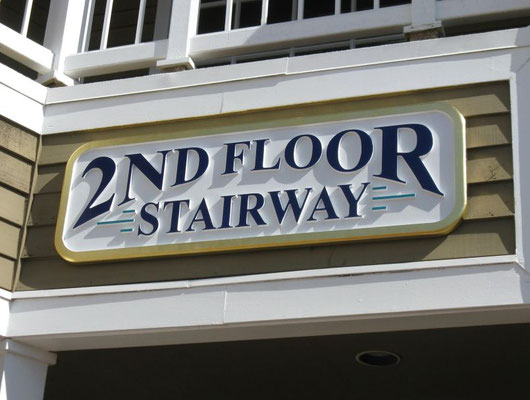
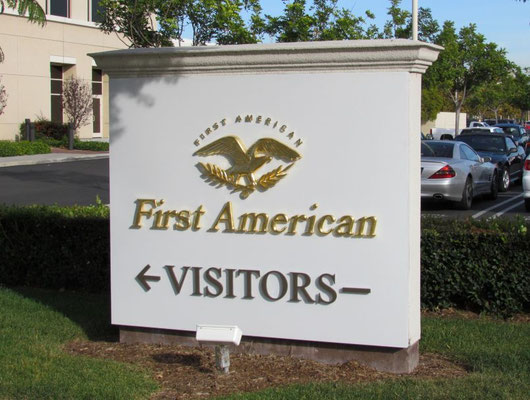
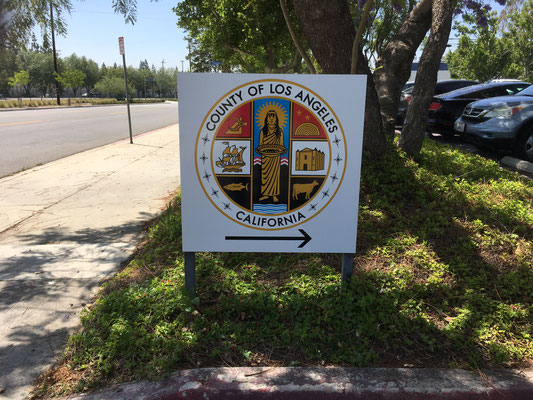
DIRECTIONAL SIGN GALLERY



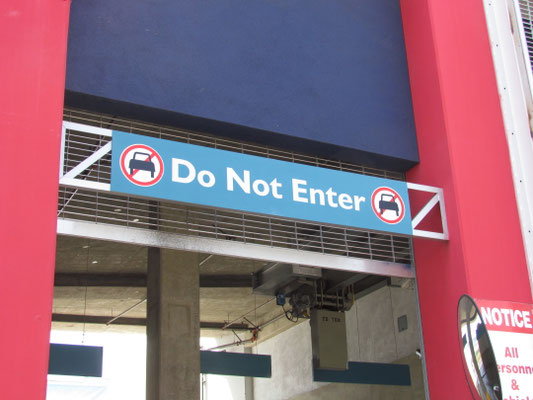
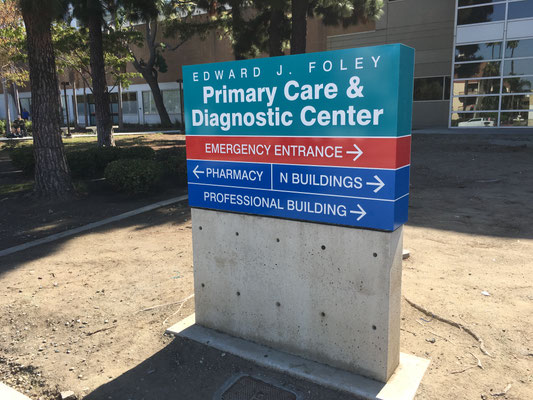
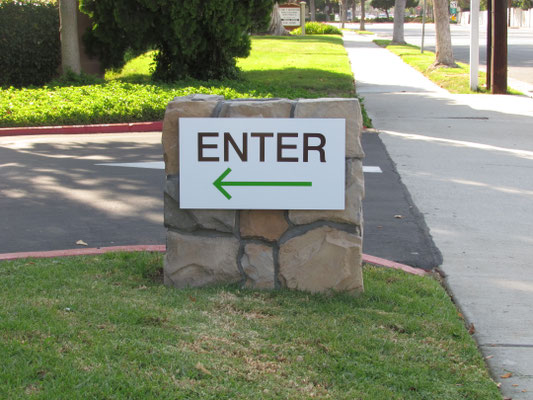

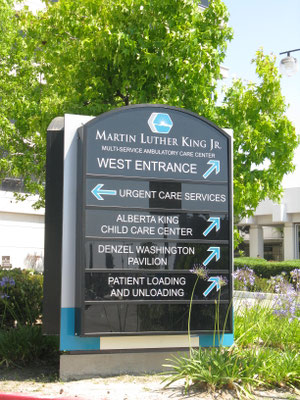

What Common Mistakes Should Be Avoided With Directional Signs?
Even well-designed directional signage can fall short if certain key considerations are overlooked. Avoid these missteps to ensure your signs guide visitors effectively and reinforce a professional property image.
-
Poor Placement: Signs that are too close to other signage, blocked by landscaping, or outside main sightlines confuse visitors, leading to wrong turns, delays, and frustration. Correct placement ensures smooth navigation while also projecting a professional, well-managed property.
-
Insufficient Size or Legibility: Letters, symbols, or arrows that are too small, too closely spaced, or low contrast reduce readability, slowing wayfinding and increasing visitor mistakes. Clear, properly sized signage improves efficiency for visitors and reduces staff time spent giving directions.
-
Overcrowded Messaging: Including too many directions or messages on a single sign creates hesitation rather than clarity. Simplifying content ensures visitors can process directions quickly, which enhances confidence and reflects thoughtful property management.
-
Ignoring Accessibility Needs: Failing to consider visibility for those with limited vision, mobility challenges, or other accessibility requirements can leave visitors feeling frustrated or excluded. Accessible signage improves the experience for all visitors and demonstrates inclusivity and attention to detail.
-
Neglecting Lighting Conditions: Signs that are not visible in low-light or nighttime conditions reduce functionality and safety. Proper illumination guides visitors effectively while reinforcing a reliable and professional image around the clock.
Avoiding these mistakes ensures that your directional signs not only help visitors navigate confidently but also support operational efficiency, reflect careful planning, and strengthen the property’s overall professional impression.
3 Things Every Property Manager Should Consider When Installing Directional Signs
If your property requires visitors to navigate multiple entrances, buildings, or pathways, Directional Signs are essential for creating a smooth experience.
1. Place Signs at Key Decision Points
Signs should be installed where visitors must make directional choices, such as parking lots, intersections, and entryways. Proper placement reduces confusion and hesitation, helping people get
where they need to go without stress. This also frees staff from constantly giving directions, improving operational efficiency.
2. Prioritize Visibility and Legibility
Directional Signs must be readable from appropriate distances and angles. Use clear fonts, high contrast, and proper illumination so information is instantly recognizable. When visitors can
easily see and understand signs, it prevents wrong turns, supports traffic flow, and reflects a professional, well-managed property.
3. Focus on Accessibility and Inclusivity
Signs should account for all users, including pedestrians, drivers, and those with visual or mobility challenges. Proper height, spacing, and placement ensure accessibility. Beyond helping
visitors, this demonstrates care and thoughtfulness in property management, reinforcing the property’s reputation as safe, welcoming, and intentional.
By focusing on placement, clarity, and accessibility, property managers ensure directional signage not only guides visitors but also signals organization, professionalism, and intentional planning. Well-designed signage reflects a property that is managed with care and leaves a lasting positive impression.
Directional Signs for Orange County and Los Angeles Businesses

In fast paced markets throughout Orange County and Los Angeles, Directional Signs help businesses stand out by making spaces easier to navigate.
From healthcare campuses to retail centers and corporate properties, clear directional systems improve visitor experience while reinforcing professionalism and operational excellence.
Well designed Directional Signage supports compliance, enhances wayfinding, and communicates that the business values clarity and organization.
If you are planning a new property, expanding an existing site, or improving visitor flow, Directional Signs provide structure where it matters most.
Contact us to design Directional Signs that support movement, clarity, and a better experience at every step.
FOR YOUR OWN DIRECTIONAL SIGNS CALL OR TEXT US AT 714.637.9900.
Need One-on-One Personal Help from Start to Finish? Ask about our low-cost and efficient:

If you are an intrepid, passionate and visionary small businessperson, Landmark has a low-cost program for you!
With our exclusive Entrepreneur's Design & Estimate Service, Landmark will:
- Spend unlimited one-on-one time with you, finding out your needs and educating you about signs.
- Survey your location and its sign needs.
- Thoroughly determine any city or county requirements.
- Produce completely custom sign designs, tailored just for you and your brand. You'll be able to change them as much as you'd like.
- Provide you with a very competitive estimate.
Best of all, when you purchase the final product from Landmark, the fee will be rebated, making it essentially free!
Write a comment